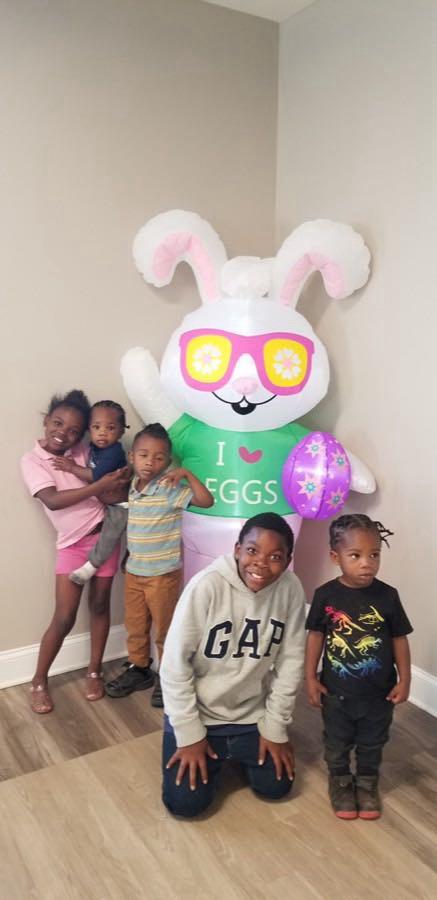
MGB INC. (Men Giving Back) played an integral role in helping the historical Kings Park Community neighborhood association plan and execute its annual Easter Hunt for the youth in the Kings Park Community. The event was held at the Kings Park Community Center in East Macon and was hosted by the Kings Park Community neighborhood association and well attended by approximately 40 children, their parents/guardians, Kings Park residents and a Macon-Bibb Co. recreation staff member.
Kelvin Middleton, CEO, of MGB INC., was instrumental in securing in-kind donations and sponsorships from NFL All Pro, DeSean Jackson, MGB INC., and local community stakeholders for decorations, plastic and gold eggs, baskets, candy and door prizes. Macon-Bibb Co. Parks & Recreation provided a small monetary donations that were placed in the gold eggs hidden in the grass and some food. The neighborhood association provided additional food and oversaw the event.
MGB INC Partners with Men About Change to Target Youth Obesity in Macon, GA
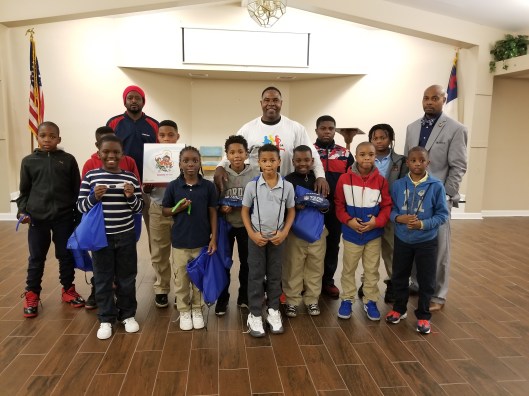
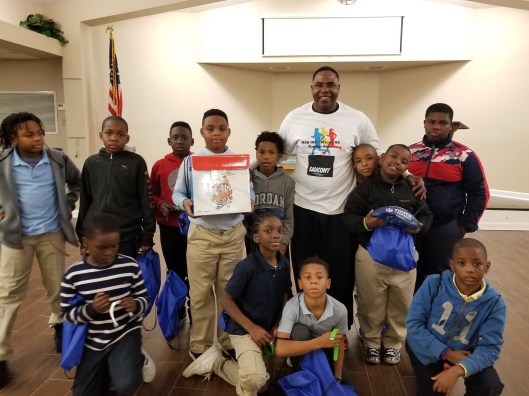
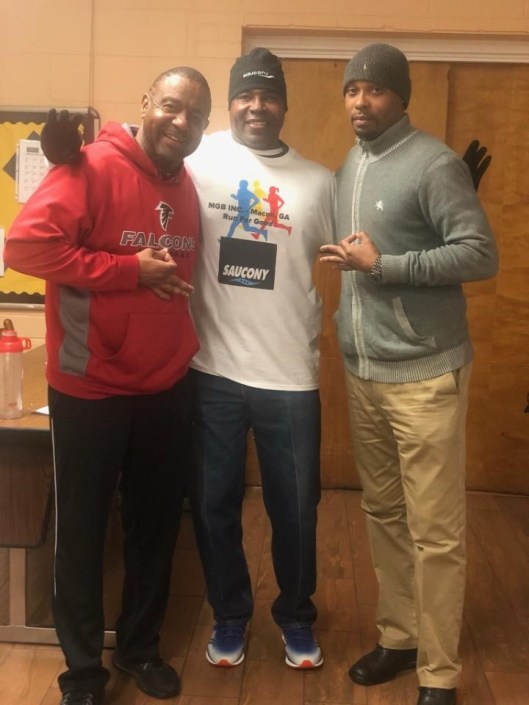
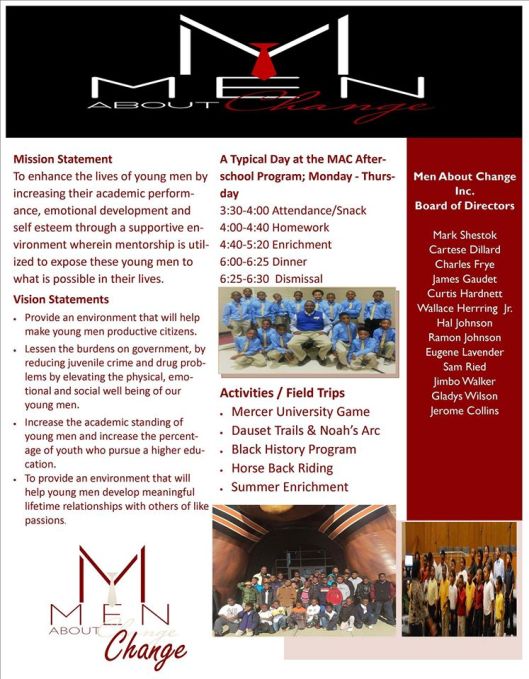
MGB INC(Men Giving Back) and Men About Change, two African American male, community-based organizations have developed a partnership to target escalating youth obesity in Macon, GA. The program launched, on Monday, at the Men About Change after school program
According to The Telegraph (2018), a report by the New York University School of Medicine’s Department of Population Health ranked Macon as one of the highest in rates of obesity among larger Georgia cities. The City of Health Dashboard tracks 36 measures affecting health for the 500 largest cities (those with populations of about 66,000 or more). Diabetes rates in the cities assessed in Georgia ranged from a low of 7.2% of adults in Sandy Springs (a more affluent community) to a high of 16.7% in Macon, Georgia where children and families are physically inactive.
Many adverse health effects are associated with overweight and are observed in children and adolescents: increased morbidity & mortality in later life, Asthma, Diabetes (Type 2), Hypertension, Orthopedic complications, Sleep Apnea, Psycho-social Effects & Stigma, taunting & bullying by peers, depression & suicidal tendencies.
MGB INC will provide free health and fitness programs [NFL Play 60, My Plate nutrition program, Presidential Active Lifestyle Award (PALA) program and a prominent national program recreational running program that targets sedentary lifestyles.
Men About Change is housed on the campus of Glorious Hope Baptist Church, Macon, GA, under the leadership of senior pastor, Dr. John Herring. Pastor Herring and Glorious Hope Baptist Church have partnered with Men About Change and provides meeting space, financial support and mentors to sustain and grow the initiative. Men About Change provides academic support, cultural enrichment, behavior modification and emotional support to well over 100 boys and girls per session from Pre-K to 8th grade.
MGB INC (MEN GIVING BACK) PARTNERS WITH MEN ABOUT CHANGE TO DISTRIBUTE BOOKS TO MACON, PRE-K PROGRAM
Dr. Erwin Clowers, Men About Change, Kelvin Middleton, MGB INC.
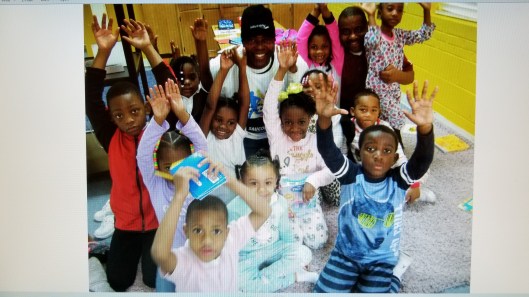
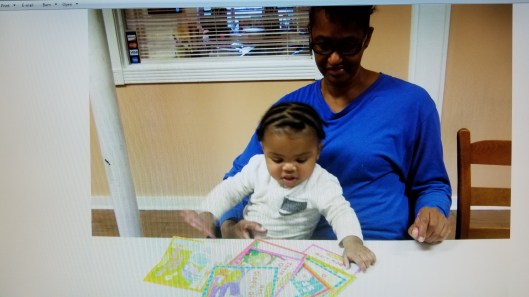
On December 19, 2019, Dr. Erwin Clowers, CEO, Men About Change, Macon, GA, graciously accepted a donation of new education and recreational books, for it’s Pre-K program, from MGB INC., a local public charity. Kelvin Middleton, CEO, MGB INC. states that is was a privilege to partner with Dr. Clowers to provide high-quality education materials to ‘bridge’ the learning process during the holiday season when children will be spending more time with their families; and, books motivate parents and guardians to be engaged in their children’s development in reading, learning and cognitive skills. Furthermore, Dr. Clowers has poured his personal finances, heart and soul into Men About Change for well over 25 years trying to impact the lives of vulnerable Macon youth; and, we all need to do more.
Men About Change is housed on the campus of Glorious Hope Baptist Church, Macon, GA, under the leadership of senior pastor, Dr. John Herring. Pastor Herring and Glorious Hope Baptist Church have partnered with Men About Change and provides meeting space, financial support and mentors to sustain and grow the initiative. Men About Change provides academic support, cultural enrichment, behavior modification and emotional support to well over 100 boys and girls per session from Pre-K to 8th grade.
MORE ABOUT MEN OF CHANGE:
To make a tax deductible donation to Men About Change, or receive more information on how you can help, please contact Men About Change (478) 305-7552.
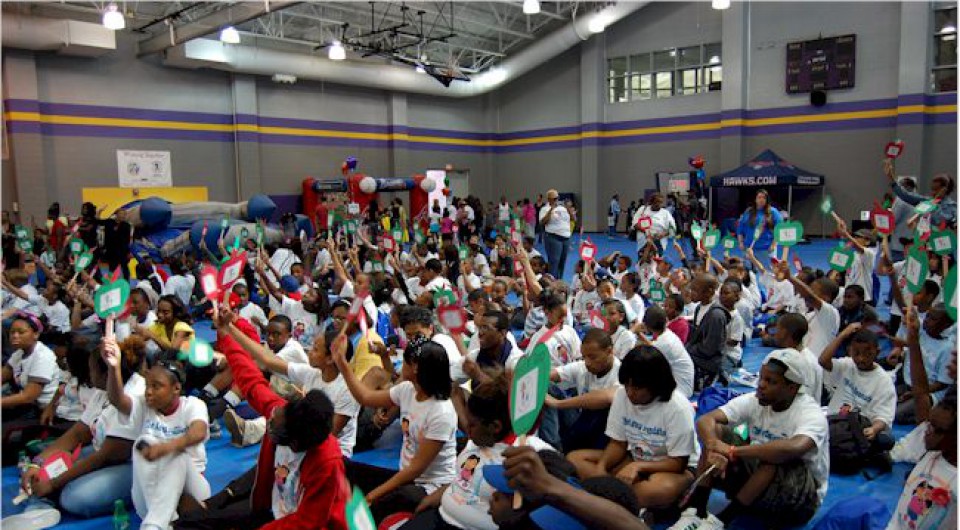
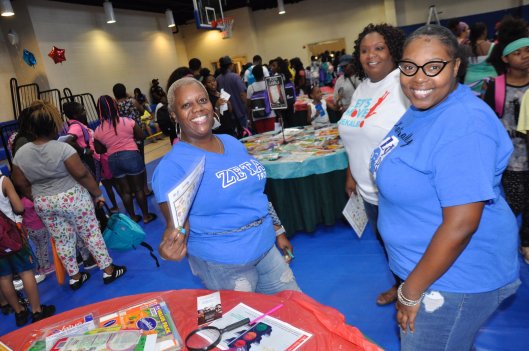
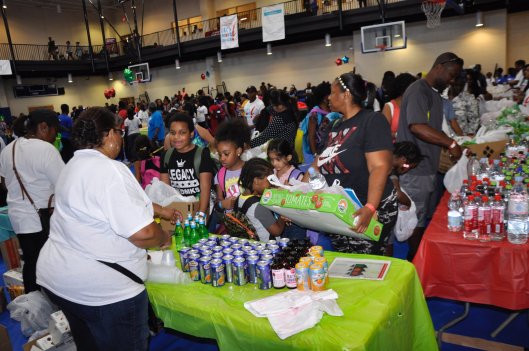
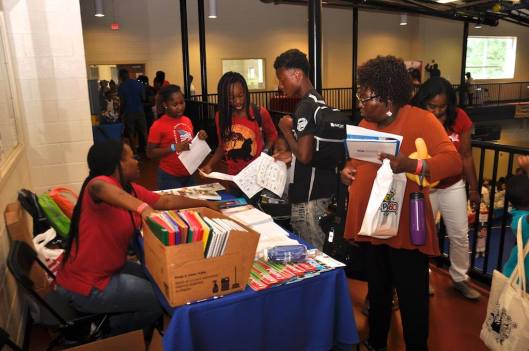
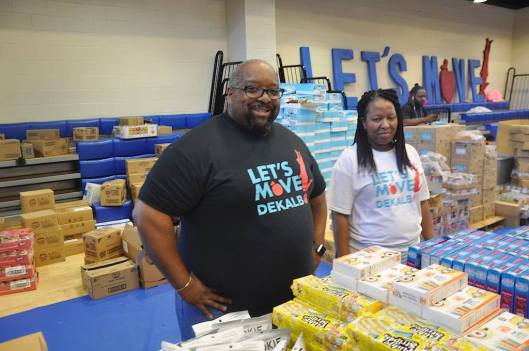
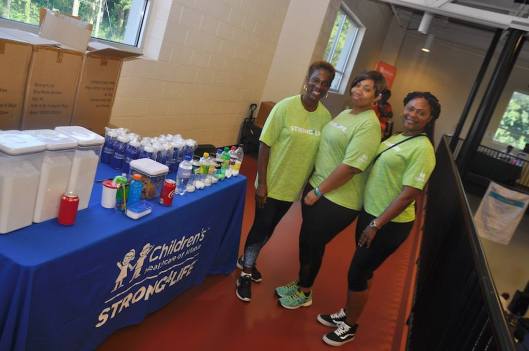
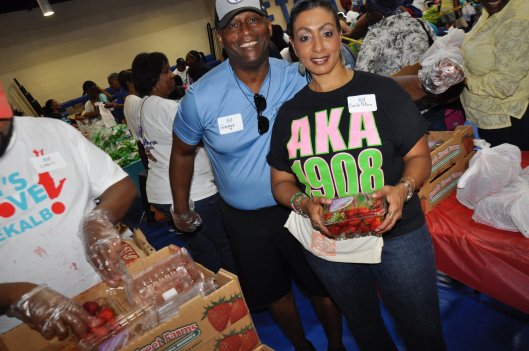
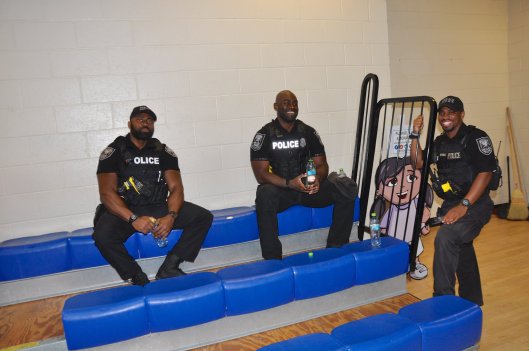
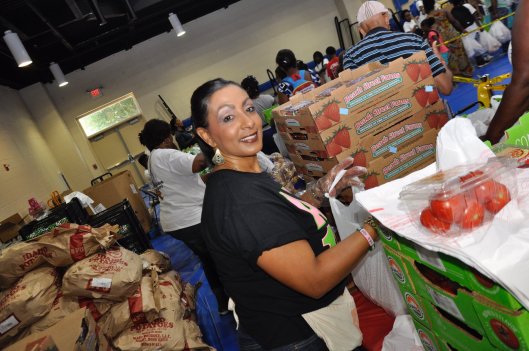
The Center Helping Obesity in Children End Successfully (C.H.O.I.C.E.), of Atlanta, Ga, extended an invitation to MGB INC., a grassroots, community-based organization, in Macon, GA,, for the 9th consecutive year, to participate in its annual Let’s Move Back to School Expo.
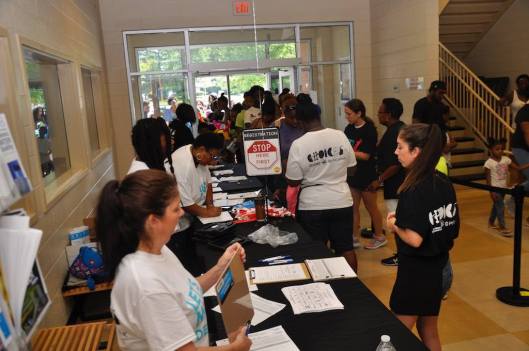
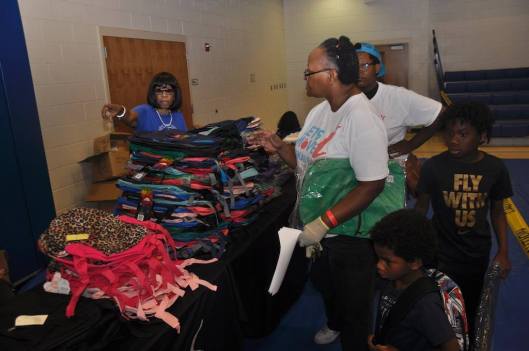
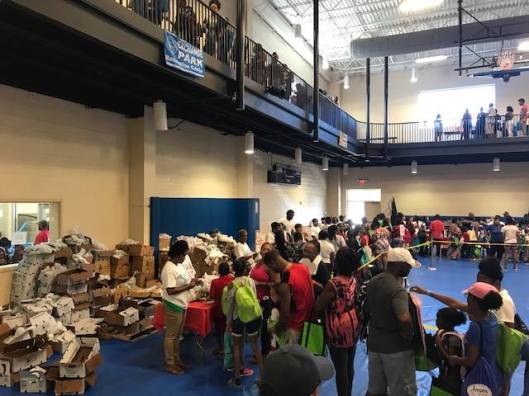
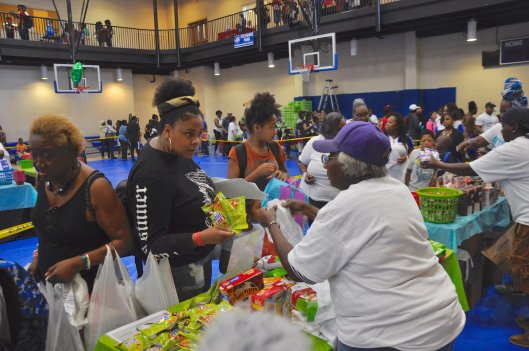
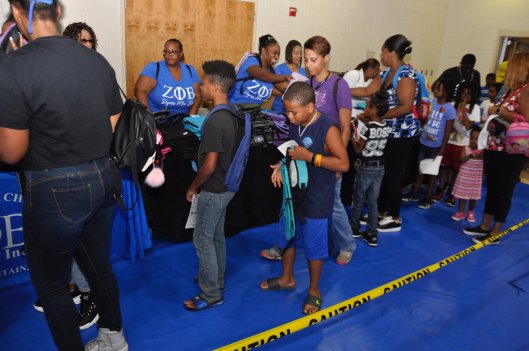
On, Saturday, July 27, 2019, MGB INC. parent volunteers and twenty (20) Macon youth traveled to Atlanta for the day-long event. MGB volunteers performed as volunteers for the Let’s Move Expo in addition to approximately 90 other volunteer organizations while the Macon youth participated in the festivities.
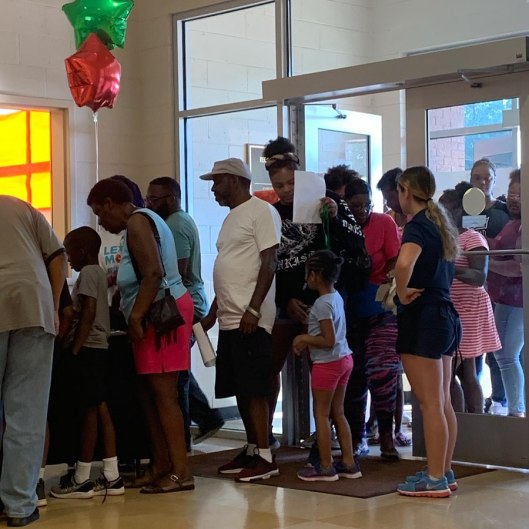
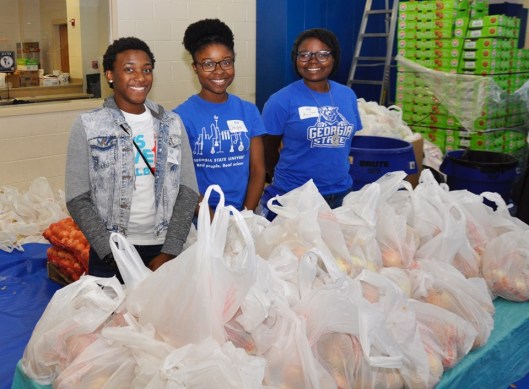
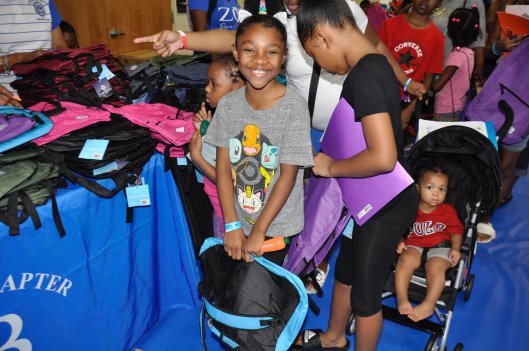
All Macon parents and youth received back packs, school supplies, goodie bags with health and nutrition items; and, food distributions from the Atlanta Community Food Bank 30,000 lb donation. Over 1,600 needy families and their children attended the event.
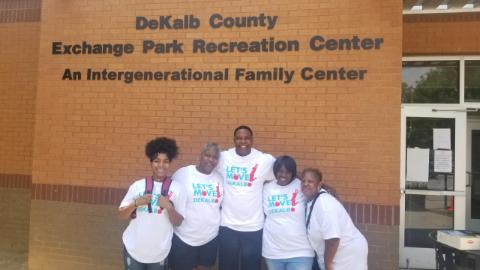
Kelvin Middleton, MGB INC., and Several Lets Move Event Volunteers
MORE ABOUT LET’S MOVE!
Let’s Move! is a comprehensive initiative, launched by former First Lady Michelle Obama, dedicated to solving the challenge of childhood obesity within a generation, so that children born today will grow up healthier and able to pursue their dreams. Combining comprehensive strategies with common sense, Let’s Move! is about putting children on the path to a healthy future during their earliest months and years.
Everyone has a role to play in reducing childhood obesity, including parents, elected officials from all levels of government, schools, health care professionals, faith-based and community-based organizations, and private sector companies. Your involvement is key to ensuring a healthy future for our children.
The 9th Annual Let’s Move! DeKalb Back-to-School Expotook place on Saturday, July 27, 2019 at the Exchange Park Recreation Center located at 2771 Columbia Drive in Decatur, Georgia and featured the following:
FREE SCHOOL SUPPLIES (Back Packs and School Supplies were distributed to over 1,200 youth)
MOBILE FOOD PANTRY (Atlanta Community Food Bank distributed over 30,000 lbs. of food, beverages including fresh vegetables and fruit
NUTRITION EDUCATION (Exhibitions, demonstrations and interactive programming)
HEALTHY LIFESTYLE INFORMATION (Exhibitions, demonstrations and interactive programming)
MGB INC. (“Men Giving Back”), a grassroots initiative, in Macon, Georgia, is the proud recipient of a 2019 ALDI Smart Kids Program grant.
Kelvin Middleton, CEO/President, of MGB INC. states that the grant will provide support for MGB’s Health and Wellness Initiative which targets youth obesity and sedentary lifestyles in Macon/Bibb County by utilizing proven best practices such as NFL Play 60, MyPlate the current nutrition guide published by the USDA Center for Nutrition Policy and Promotion; and, empowering men in the community to become active participants in the health and welfare of their children.
Information about the ALDI Smart Kids Program
ALDI established the ALDI Smart Kids Program to provide funding and/or gift cards to local organizations that promote kids being active and healthy.
Through the ALDI Smart Kids grant program, ALDI partners with local nonprofit organizations including K-12 schools, fire and police departments, and faith-based organizations that serve the community. Grants are smaller in size and designed to support communities with ALDI stores, where we all live, work and shop!
So, whether your mission is to support kids through education, arts, nutrition, physical activity or any other program that inspires them to excel and be healthy, ALDI encourages you to visit ALDISmartKids.com to learn more and apply for support.
MGB INC. RECEIVES 2019 SAUCONY RUN FOR GOOD FOUNDATION GRANT
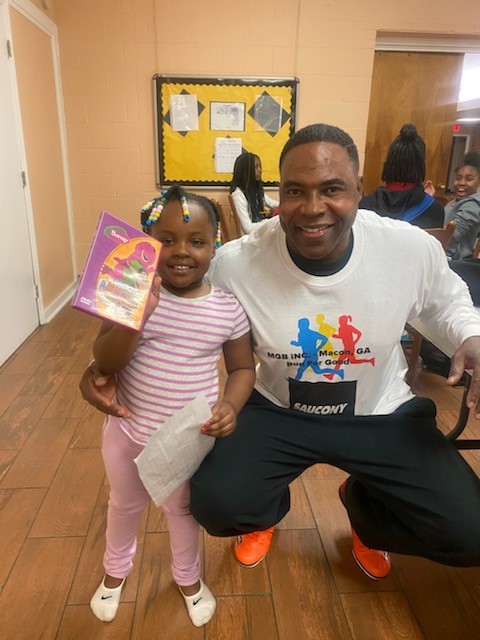
MGB INC. is the proud recipient of the prestigious 2019 Saucony Run for Good Foundation grant of $10,000. The Saucony Run for Good Foundation was established to help combat childhood obesity by providing financial support to community-based youth running programs. The mission of the Saucony Foundation is to improve the lives of children by further optimizing the impact and success of community organizations that inspire kids to run. Since 2006, the Saucony Run for Good Foundation has awarded over one million dollars to nearly 120 schools and community organizations–all dedicated to preventing childhood obesity through running and an active lifestyle.
According the the Centers for Disease Control and Prevention (CDC), childhood obesity has more than tripled over the past 30 years. One of five children, age 6 to 11, is considered obese. The number are even higher in African American and Hispanic communities, where nearly 40% of the children are overweight or obese. Many will face chronic obesity-related health problems like heart disease, high blood pressure, cancer and asthma.
Kelvin Middleton, President/CEO, of MGB INC. states that Macon has the highest obesity rate of similar major cities in the United States according to a recent study conducted by the New York University School of Medicine, Department of Public Health. (Macon Telegraph, May 21, 2018). “We are facing a crisis epidemic”, states Middleton, “and we cannot wait for anyone else to save our children and families.” The Saucony Run for Good Foundation brand is focused on runners and social responsibility; and, will directly help combat childhood obesity and also include instruction related nutrition, self-esteem, social skills and making appropriate, healthy choices.
Tony Dungy was the first coach to lead the Tampa Bay Buccaneers onto their new home field at Raymond James Stadium. Now Coach Dungy’s name will be added to that stadium’s façade for all future Buccaneers and fans to see, and to remember the role he played in achieving a remarkable franchise turnaround.
On Monday, September 24, 2018, Tony Dungy will be inducted into the Buccaneers’ Ring of Honor at Raymond James Stadium. The honor will come via a halftime ceremony during the Buccaneers Week Three Monday Night Football game against the visiting Pittsburgh Steelers.
“Tony Dungy’s impact on the Buccaneers and the Tampa Bay community is not measured in terms of wins and losses,” said Buccaneers Owner/Co-Chairman Bryan Glazer. “Tony transformed our entire organization and established a winning culture that set the foundation for the most successful era in our franchise’s history. Through his exceptional leadership, Tony set a new benchmark for excellence on and off the field that we still strive to achieve to this day.”
Dungy will become the 12th member of the Ring of Honor, and the third former head coach to have his name placed among the franchise’s all-time greats. Founding Head Coach John McKay was the second person inducted into the Ring, in 2010; he was joined last year by former Head Coach Jon Gruden, who succeeded Dungy at the helm and led the 2002 Buccaneers to their first Super Bowl title.
Named the sixth head coach in franchise history on January 22, 1996, Dungy has the best winning percentage among all Buccaneer head coaches. He guided the Buccaneers to a 54-42 regular-season record, with four of those six campaigns resulting in playoff appearances. Dungy’s 1996 squad started the season 0-5 but famously followed its patient head coach, stuck to the plan and began to see results by season’s end.
The ’96 Buccaneers finished 6-10 but won five of their last seven games; the ’97 Buccaneers won 10 games and broke a 15-year franchise playoff drought. That was the team’s first winning record since a 5-4 finish in the strike-shortened 1982 campaign. Dungy’s next five teams would all finish .500 or better.
Tampa Bay also record its first playoff victory in 18 years at the end of that 1997 season, beating the Detroit Lions, 20-10, in the final game played at Tampa/Houlihan’s Stadium. The Buccaneers lost to the Green Bay Packers in the divisional round to bring their 1997 run to an end, but they were on the verge of another milestone with Raymond James Stadium due to open in 1998.
Dungy’s Buccaneers won the first game in their new home, rallying from a 15-0 first-half deficit to beat the visiting Chicago Bears on September 20, 1998. That team failed to make it back to the postseason, eliminated on the final weekend despite a season-capping 35-0 blowout of the Bengals in Cincinnati, but it did deal the 15-1 Minnesota Vikings their only regular-season loss of the year.
Dungy got his first head coaching job in Tampa after four seasons as the defensive coordinator for the Vikings. (Coincidentally, his first win as the Bucs’ coach in 1996 also came against Minnesota.) After bringing former New Orleans Saints coach Monte Kiffin on board to serve as his defensive coordinator, Dungy fashioned one of the greatest defenses in NFL history over the next half-dozen years. Dungy and Kiffin so thoroughly mastered the implementation of the Cover Two defense that it is now widely referred to as the “Tampa Two.”
After improving from 27th in the NFL in defense in 1995 to 11th in Dungy’s first season, the Buccaneers began a streak of nine straight seasons in which they finished in the 10 in those rankings, including two number-one rankings and seven top-five landings. The first five years of that streak came with Dungy at the helm. His 1999 squad, led by NFL Defensive Player of the Year Warren Sapp, carried the Buccaneers to a then-franchise record 11 wins and a trip to the NFC Championship Game. The St. Louis Rams, playing on their home turf and coming off one of the most prolific offensive seasons in league history, were heavily favored in that conference championship match, but the Buccaneers’ defense ruled most of the night. Though the Rams averaged more than 30 points per game during the 1999 regular season, Sapp and the Buccaneers had a 6-5 lead late in the third quarter before a late Kurt Warner touchdown pass and a controversial no-catch ruling against the visitors led to an 11-6 win for the home team.
The Buccaneers went back to the playoffs after the 2000 and 2001 seasons, marking the first time in team history that they had made three straight trips to the postseason. Unfortunately, both of those seasons ended in playoff losses at Philadelphia, and Dungy’s’ tenure at the Bucs’ helm came to an end at the conclusion of the 2001 campaign. The Buccaneers would go on to win the Super Bowl the following season, with the defense Dungy constructed playing a big role.
Dungy would go directly from the Buccaneers to the Colts and would go on to guide Indianapolis through seven highly successful seasons. The Colts compiled an 85-27 regular-season record with Dungy at the helm and went to the playoffs after each of those seven seasons. The 2006 campaign ended with a trip to Super Bowl XLI, in which Indianapolis beat Chicago, 29-17, making Dungy the first African-American head coach to win a Super Bowl.
Those achievements in Indianapolis led to his induction into the Colts’ Ring of Honor in 2010. The Buccaneers, of course, have chosen Dungy for their own franchise honors based on his trailblazing time in Tampa. Dungy was the first head coach hired by Malcolm Glazer, who purchased the team in 1995 and made the first seminal move in reviving the moribund franchise by bringing in this new leader. The Buccaneers got new uniforms in 1997, their new playing home in 1998 and a trip to the verge of their first Super Bowl berth in 1999.
“I will always be grateful to the Glazer family for giving me my first opportunity to coach a team,” said Dungy. “It was an awesome time for me and my family as we encountered so many special players, staff members, and fans. This induction into the Buccaneers Ring of Honor puts a bow on all those great memories.”
Tony Dungy‘s role in turning the franchise around made him a popular man among Buccaneer fans who had been starving for a successful team to support. However, he also was – and remains – beloved in the Bay area for his civic involvement and service to the community. In 1997 he helped found the Tampa-based non-profit organization All Pro Dad, which uses NFL players and coaches to stress the importance of being a good father. Later, after his tenure with the Buccaneers, Dungy was appointed by George W. Bush to the President’s Council on Service and Civic participation.
That Dungy’s induction into the Buccaneers’ Ring of Honor will take place with the Steelers in the house is a sweet coincidence. Dungy played the first two seasons of his NFL career in Pittsburgh, winning a Super Bowl ring with the Steelers following the 1978 season. A running back in college at Minnesota, he converted to defensive back in Pittsburgh and was the Steelers’ leading interceptor in the Super Bowl season. After a trade to the 49ers in 1979, Dungy finished his playing career with one year in San Francisco and one with the New York Giants.
Dungy went immediately into coaching after his final season as a player, spending one year at his college alma mater before Steelers’ Head Coach Chuck Noll brought him back to the Pittsburgh Steelers.
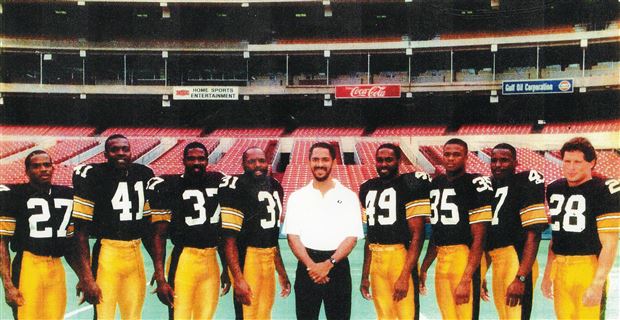
[Coach Tony Dungy, Steelers’ Defensive Coordinator, Kelvin Middleton, #37, from Macon, Georgia, Southwest High School].
Coach Tony Dungy rose to defensive coordinator by 1984 and held that role for five years before going to the Kansas City Chiefs as a defensive backs coach in 1989, then to the Vikings as their coordinator in 1992. During those years, he used what he had learned under Chuck Noll to put his own spin on the Cover Two defense. The Vikings quickly developed into a defensive powerhouse under his guidance, and that led to his first head coaching opportunity in Tampa.
Dungy is now a broadcaster for NBC, but he continues to have an impact on the game on the field, largely through the fruits of his coaching tree. Among those who have coached on his staffs and gone on to NFL head coaching jobs of their own are Lovie Smith, Mike Tomlin, Jim Caldwell, Leslie Frazier, Herm Edwards and Rod Marinelli. Smith, Tomlin and Marinelli all began their NFL careers when Dungy hired them from the NCAA ranks as assistants on his staff.
Congratulations, Coach Tony Dungy – Kelvin Middleton
Robin Crosby, Executive Director, Campus Clubs, Kelvin Middleton, MGB INC., New City Church Macon representative
Thank you to former NFL player and Executive Director of Men Giving Back (MGB Inc), Kelvin Middleton, and members of New City Church Macon for touring Campus Clubs today! We appreciate your interest in our community development center! – Robin Crosby
For More Information About Campus Clubs: Interested in seeing what all we do? Come take a tour! Call 478-742-7794 or email Robin Crosby at rcrosbycc@gmail.com
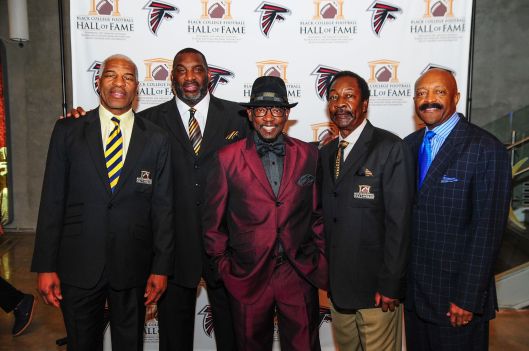
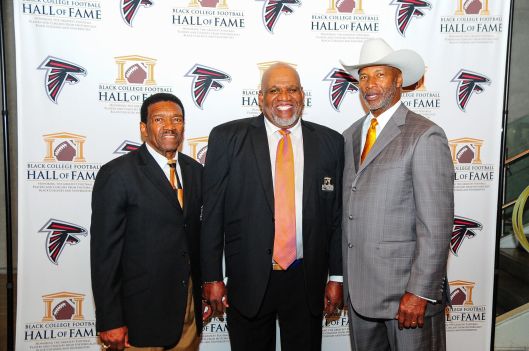
College Football Hall of Fame, Atlanta, GA • Saturday, February 10, 2018
Press Release
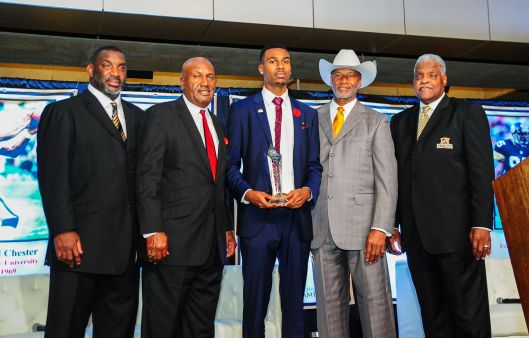
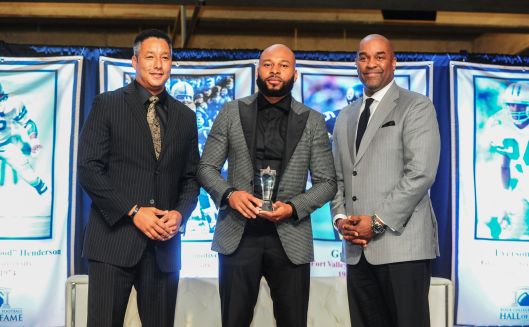
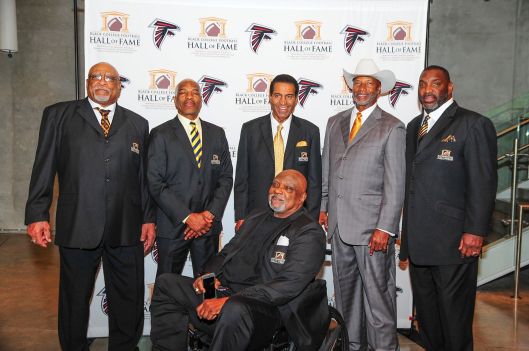
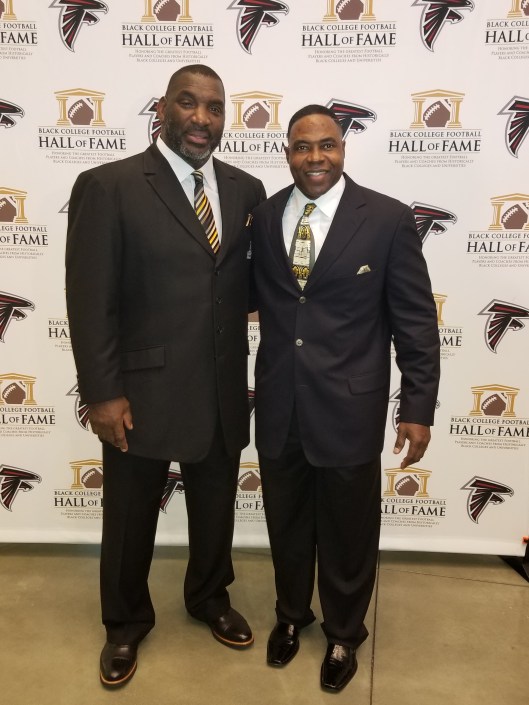
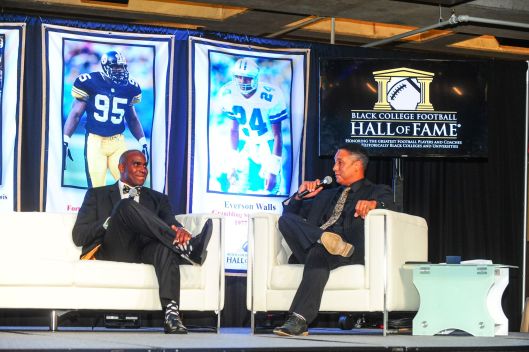
The Black College Football Hall of Fame, Class of 2018 was honored at the Ninth Annual Black College Football Hall of Fame Induction Ceremony, Presented by the Atlanta Falcons on February 10, 2018. The sold-out Induction Ceremony was held at the College Football Hall of Fame in Atlanta, Georgia.
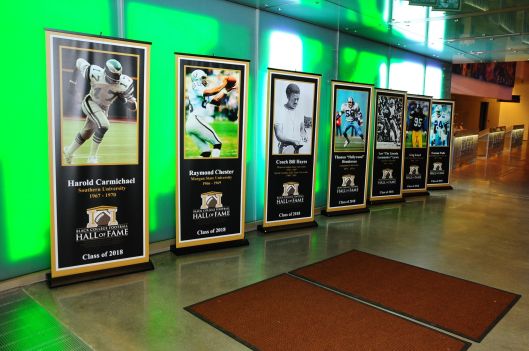
The Class of 2018 includes Harold Carmichael (Southern), Raymond Chester (Morgan State), Thomas “Hollywood” Henderson(Langston University), Leo “Lincoln Locomotive” Lewis (Lincoln), Greg Lloyd (Fort Valley State), Everson Walls (Grambling State)as player inductees and Coach Bill Hayes (Winston-Salem State and North Carolina A&T).
“This class represents three Super Bowl rings, 18 Pro Bowl selections and several Black College Football championships,” said BCFHOF Co-Founder and 2011 Inductee, Doug Williams. “Take a look at what they’ve done off the field as well, and each has earned this incredible honor.”
Votes were tallied from the 12-member Selection Committee, comprised of prominent journalists, commentators and historians, as well as former NFL General Managers and executives, and from previous BCFHOF inductees to determine the 2018 Inductees.
Bowie State junior quarterback Amir Hall was selected as the 2017 recipient of the Black College Football Player of the Year Award. He was presented with the Deacon Jones Trophy, named in honor of the football legend and inaugural Black College Football Hall of Fame inductee.
Arizona Cardinals Safety Antoine Bethea was selected as the inaugural recipient of the Black College Football Pro Player of the Year Award, presented by the NFLPA. It will be awarded annually to the most outstanding professional football player from a Historically Black College and University.
The Inductees were also recognized on ESPN at the Celebration Bowl in Atlanta on December 16th, 2017.
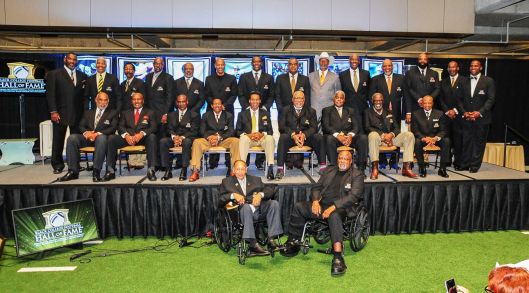
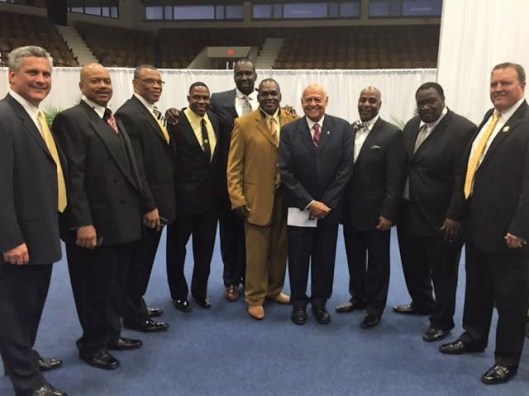
2018 – All of the Past and Present Black College Hall of Fame Inductees
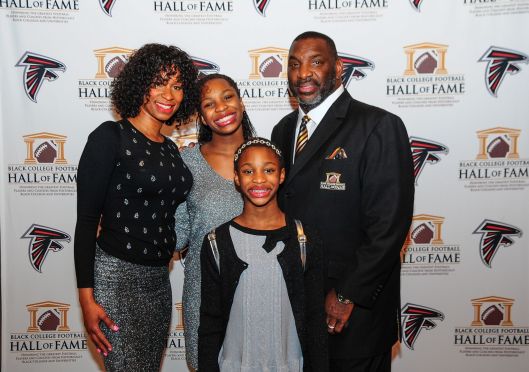
The Doug Williams Family
2018 – Inductee Banners
Amir Hall with Black College HOF Trustees – Doug Williams, Willie Lanier, Mel Blount, Art Shell
Antoine Bethea with Steve and Carl
Claude Everson, Butch, Mel Blount, Doug Williams, Burrough
Doug Williams and Everson Walls
Doug Williams and Kelvin Middleton – Former USFL Oklahoma/Arizona Team Members
Harold Jackson, Hollywood Henderson, Mel Blount
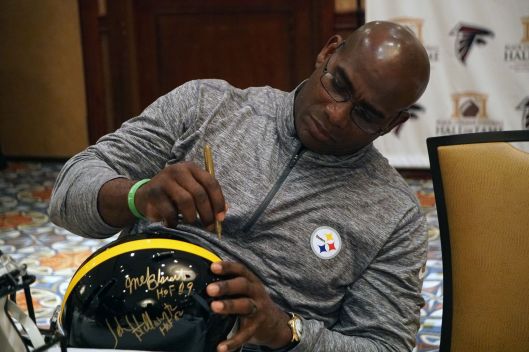
Kelvin Middleton and Greg Lloyd – Former NFL Pittsburgh Steelers Team Members
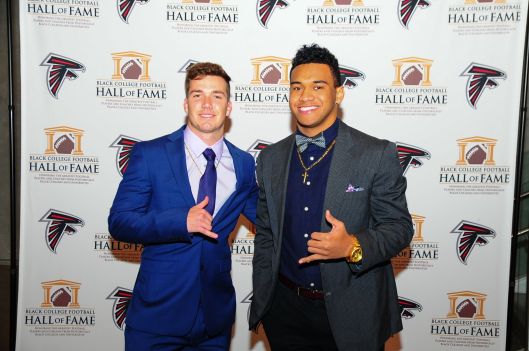
McKenzie and Tua Tagovailoa, Alabama Quarterback
Gregg Lloyd Interview – 2018 BCF HOF Inductee & Fort Valley & Former Pittsburgh Steelers
Gregg Lloyd – Autograph Session – 2018 Black College HOF Inductee
Tua Tagovailoa, Alabama Quarterback and Kelvin Middleton
History
Black College Football began play in 1892 with segregation well-established and heavily managed with Jim Crow laws. Following World War I the sport of college football ignited the passions of patriotism, pride and school spirit as America had found a new past time.
From the cotton fields of the South to the slums of major cities, young black boys dreamed of glory in this newfound game with the only problem being that they couldn’t play the sport wherever they wanted. For more than 70 years, young black college-bound football players flocked to black colleges and universities. While the major state institutions allowed only a trickle of black players into their programs, the vast majority of black football players, prior to 1965, played at Historically Black Colleges & Universities (HBCUs).
Black College Hall of Fame – History
Born of farms and city neighborhoods and with little to no formal football training, coaches with little notoriety or glamour, gave of themselves for their love of the game. These teachers of men faced inferior facilities, less than stellar equipment and very few venues in which to showcase the enormous talent, thus establishing a trend that continues through today.
About The Black College Hall Of Fame
The Black College Football Hall of Fame was founded in 2009 by African-American pioneers, quarterbacks James Harris and Doug Williams to preserve the history and honor the greatest football players, coaches and contributors from Historically Black Colleges and Universities (HBCUs). There have been 64 Inductees since inception, including Mel Blount, James Harris, Willie Lanier, Art Shell and Doug Williams, who serve as Trustees.
The Black College Football Hall of Fame is presented annually by The Shack Harris & Doug Williams Foundation, a 501(c)(3) non-profit, tax-exempt organization.
In October 2015, Willie Jeffries Weekend was celebrated at South Carolina State, where Jeffries enjoyed his greatest successes, compiling a 128-77-4 record during two stints as the head coach and winning seven conference titles and three Black College National Championships. Officially called “Honoring the Legacy of Willie Jeffries,” the special weekend at his alma mater was simply the latest accolade of many that have been bestowed on Jeffries, who is already a member of the College Football Hall of Fame. But, the SC State gathering surely provides the perfect reason to revisit his historic achievement as a pioneer in the coaching profession.
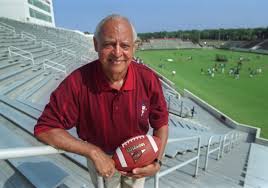
Coach Willie Jeffries
A group of Jeffries’ former Wichita State University Shocker players attended the festivities, and linebacker Mike Johnston ’84 spoke for the team during a formal gathering. In front of a mostly South Carolina crowd, the colorful Johnston hit all the right notes.
Willie Jeffries was honored for his “coaching legacy” by
South Carolina State’s athletics department, in conjunction with the SC State
Former Athletes Association, during a special weekend of events held Oct.
16-17 in Orangeburg, S.C. Former Shocker football players in attendance
were Mike Johnston ’84, Billy Wilson fs ’82, Elwyn Holt fs ’84, Kelvin
Middleton ’88, James “Jumpy” Geathers fs ’84, Ron Horton ’90, Maurice
Foxworth ’86, Danny Jones ’81 and Jay Hull ’83. When Wichita State hired
Jeffries in 1979 from SC State, he entered the sports history books as the
first African American head football coach at a Division 1A university.
He explained WuShock, Wichita State’s “goofy mascot,” by sharing with the non-Shocker crowd the origins of the university’s Shocker nickname for its sports teams. “In the old days,” Johnston related, “farmers would cut the wheat with a scythe and make bundles of Shocks of wheat.”
He called Jeffries “a leader of men and a father to many” and he told humorous stories about Jeffries, explaining how “Coach was funny even when he was mad.” Johnston can still clearly picture a fed-up Jeffries, staring hard at the ground in the middle of a huddle, small pinch of tobacco in his cheek, berating the team for not practicing hard enough. He wanted to hear the sounds of pads crunching.
Although two other black candidates turned down the head coaching position at Wichita State, Willie Jeffries was undoubtedly the right man for such a historic moment.
Growing up in tiny Union, S.C., Jeffries learned about the value of hard work and the sting of segregation. He was born in 1937, and his father passed away when he was only 4; Jeffries got a job as a caddy at an all-white country club to help his mother make ends meet.
He began his head coaching career at Granard, the black high school in Gaffney, S.C., and led the team to three state championships and a 64-8-2 record. The success did not occur under the famed Friday night lights, however, as Granard played its games on Thursdays so Gaffney, the white school, could use the field on Fridays.
Jeffries paid his dues as an assistant coach at the collegiate level, including a stop at Pittsburgh, where he helped recruit an outstanding freshman class (including Tony Dorsett) that won a national championship four years later.
Then came the success at South Carolina State (50-13-4, five conference titles) that would earn Jeffries a call from WSU Athletic Director Ted Bredehoft and the opportunity to make history.
Interestingly, Jeffries says that he simply viewed the Wichita State position as a well-deserved promotion.
“We couldn’t do any better at South Carolina State,” Jeffries told The Shocker in mid-November. “I wanted to be like Daniel Boone and Lewis and Clark and go explore. I didn’t realize until the press people started calling and saying that I was the first black head coach, and that maybe I could open the door for others. Once I realized the pressure I had for winning, it was a lot on my shoulders, to tell you the truth.”
While Jeffries may not have fully realized the significance of the moment, others certainly did. Headlines from the time of his hiring reveal that much of the focus was on his color, not his already impressive list of accomplishments.
Read two newspaper headlines:
“WSU Hires Black Head Coach”
“Wichita State Hires Black to Run Football Program”
The intensity of the spotlight on the 42-year-old Jeffries was immense. Herman Boone, the black high school football coach made famous in the movie “Remember the Titans,” compared Jeffries’ role in sports and society to that of Jackie Robinson.
It’s certainly understandable if Coach Jeffries didn’t allow himself to appreciate the enormity of the moment when he was hired at Wichita State. Because an enormous challenge was ahead — Shocker football had produced only one winning season in the previous 15.
Progress was steady. Jeffries is rightly credited with improving the talent level at Wichita State, evidenced by the fielding of such players as James “Jumpy” Geathers fs ’84, a massive defensive end who would play in the NFL, and Prince McJunkins ’86, a dual-threat quarterback who made history of his own as the first player in NCAA history to rush for 2,000 yards and pass for 4,000; and Kelvin Middleton ’88 fs who had an outstanding career in the USFL (Oklahoma/Arizona Outlaws) and later joined the NFL Pittsburgh Steelers as a free agent. .
But, as former offensive lineman Jay Hull ’83 stresses, how Jeffries treated and coached those superior athletes is why he was able to put Shocker football on more solid footing. “Coach Jeffries cared about you as a person,” Hull says. “He would always ask how you were doing, ask you how your parents were doing. He took a sincere personal interest in everybody. That means a lot. It made you want to play hard for him.”
In season four of Jeffries’ tenure, the Shockers enjoyed a breakout season. WSU went 8-3 in 1982, including a 13-10 victory over the Kansas Jayhawks — a victory the city proudly celebrated on billboards and T-shirts all over town.
Casey Scott covered the Shockers for the Wichita Eagle during part of Jeffries’ tenure before joining the athletic department. He credits Jeffries for restoring “relevance” to the program.
“What do most people remember when they think of Shocker football? They think of the plane crash in ’70; that was a real setback for the university and, really, the entire community. Willie had an engaging personality, and because of that and some of the athletes he brought in and the offense he ran, I think he brought some excitement back to a program that really had a pall cast over it for quite a few years.”
Willie Jeffries, now 78, says with pride that he’s still active professionally four or five days a week. He does speaking engagements and helps raise funds for South Carolina State.
Looking back on his time at WSU, Jeffries says he appreciates the support he received from AD Bredehoft and university president Clark Ahlberg ’39. Unprompted, he mentions the NCAA probation for recruiting violations that clouded his history-making tenure at Wichita State before his resignation after a 3-8 season in 1983.
Shocks of the Dinner Table
• Coach Jeffries had the perfect recipe for keeping some of the out-of-state Shockers happy. He recalls having Kelvin Middleton defensive corner back ’88, defensive end Jumpy Geathers fs ’84, along with basketball players Cliff Levingston fs ’84 and Xavier McDaniel ’96, over for dinner. (Antoine Carr fs ’83 would show up, too, even though he was from Wichita.) “If they got homesick, they knew that every Sunday my wife would be cooking up a pot of pig’s feet,” Jeffries says. “We’d have a great big pot of those, plus collard greens and potato salad and cornbread. Those guys would just dig in. It was great. We knew how important it was to make somewhat of a home environment to keep them happy on the plains of Kansas.”
• According to the the Institute for Diversity and Ethics in Sport, the number of head football coaches of color at the FBS level decreased from 15 in 2013 to 14 at the start of the 2014 season. Nearly 89 percent of head coaches were white. Jeffries isn’t pleased with those numbers, but he did note that black men are getting jobs at power schools, such as Charlie Strong at Texas. “The numbers aren’t quite enough at all, but the jobs are better,” Jeffries says. “We’re getting a chance to fight with a 2-by-4 and not with a toothpick.”
• Shocker fans seem to have positive memories of Jeffries. “I think that because of the way Willie went on about his life and his career and continued to make differences in the lives of his players,” notes Wichita Eagle columnist Bob Lutz, who covered WSU football during a portion of Jeffries’ tenure. “The fact that so many of his players still talk about him, still tell stories about him and clearly revere him says a lot for what a good football coach he was and, more than that, what a good man he is.”














 [Coach Tony Dungy, Steelers’ Defensive Coordinator, Kelvin Middleton, #37, from Macon, Georgia, Southwest High School].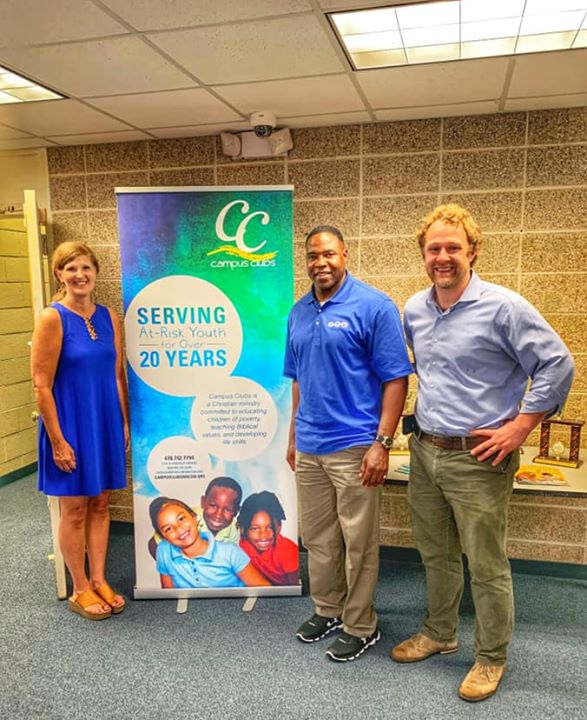




 MGB INC. - Men Giving Back